Machine Learning
Learn how our platform uses machine learning to enhance trading decisions and filter signals.
How Machine Learning Works
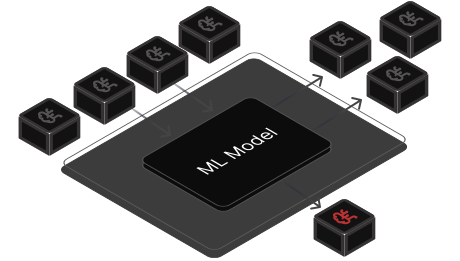
Our platform uses machine learning to analyze trading signals before they're executed. The ML model evaluates each potential trade based on historical patterns and market conditions, helping to filter out lower-quality entries that are less likely to succeed.
Signal Evaluation
When a new trading signal is generated, it doesn't go straight to execution. Instead, the ML system assigns a quality score based on various market factors. Only signals that meet our confidence threshold are passed through for trading. This adds an extra layer of intelligence beyond the core algorithm logic.
Training and Adaptation
The machine learning model is trained on historical market data to recognize patterns associated with successful and unsuccessful trades. It learns from past outcomes to make better predictions about future signal quality. The model is periodically updated to stay relevant as market conditions evolve.
A Simplified Example
Let's walk through how this works using Bitcoin as an example. While our system evaluates multiple instruments—and we actually score each instrument beforehand to determine which ones respond well to our strategies—we'll focus on one to keep things simple.
Step 1: Gathering Information
When a trading signal appears, the model looks at current market conditions: things like recent price momentum, volatility levels, and trend strength. Think of these as the "ingredients" the model uses to make its decision.
Step 2: The Voting Process
We use a technique called Random Forest, which is essentially a collection of many decision trees—each one trained on slightly different data. When a new signal comes in, every tree in the forest "votes" on whether it looks like a good or bad trade based on the patterns it learned.
Step 3: Counting the Votes
If most trees vote that a signal resembles historically successful trades, the signal receives a high quality score. If the majority vote that it looks more like past losing trades, the score is low. The final probability reflects how confident the forest is overall.
Step 4: The Decision
Signals with scores above our threshold proceed to execution. Those below the threshold are filtered out—you can see these filtered signals in the backtest results, giving you transparency into what was skipped and why.
What This Means for You
You don't need to understand the technical details—the ML filtering works automatically in the background. Its goal is simple: reduce exposure to trades that historically have shown weaker performance characteristics. This helps improve overall trade quality while the core algorithm focuses on identifying opportunities.
Important Considerations
Machine learning is a tool to enhance decision-making, not a guarantee of success. While ML filtering aims to improve results by avoiding lower-probability setups, no model is perfect. Market conditions can change in ways that differ from historical patterns, and the model's effectiveness may vary over time.
⚠️ Disclaimer: Trading cryptocurrencies involves significant risk of loss. Past performance does not guarantee future results. Always do your own research before making investment decisions.